Junior's Old Room Could Pay the Mortgage: A Florida Guide to Bedroom-to-Suite Conversions
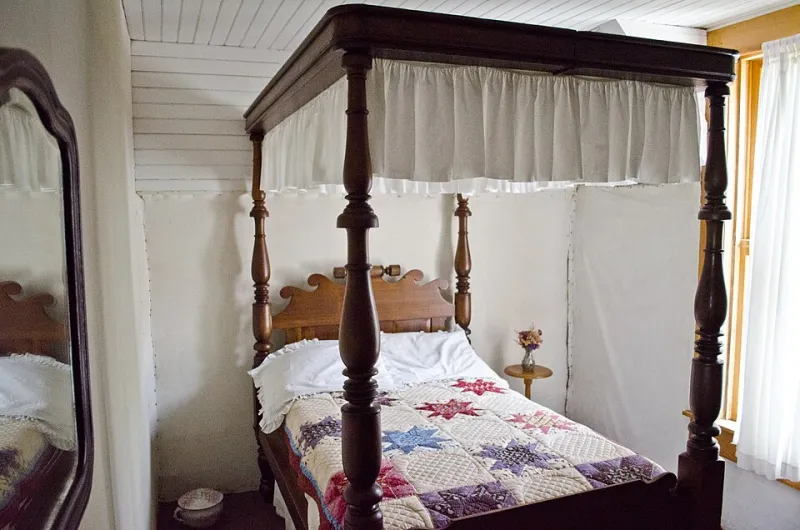
Photo: Tim Evanson, CC BY-SA 2.0, via Wikimedia Commons
Somewhere in nearly every Florida neighborhood built before 1990, there's a bedroom that hasn't changed since the mid-2000s. Faded band posters, a ceiling fan with three working blades, maybe a glow-in-the-dark star or two still stuck to the ceiling. The kid grew up and moved out. The room stayed behind.
For a growing number of Florida homeowners, that room is starting to look less like a memory and more like a mortgage payment. Converting an unused bedroom into a small, self-contained suite — with its own bathroom or kitchenette, a private entrance, and a legal path to short- or long-term rental — has become one of the more practical renovation plays in the state. But it's also one of the most misunderstood. Here's what licensed Florida contractors say homeowners need to know before the first wall comes down.
First Question: Can You Legally Rent It?
This is where most projects stall, so tackle it early. Florida has no statewide rule that uniformly permits or prohibits accessory rentals — it's a patchwork of county and municipal codes.
In many unincorporated areas and older suburbs, renting out a room within your primary home is straightforward. The complications usually show up when you add a separate entrance, a full kitchen, or market the space as a standalone dwelling. At that point, some jurisdictions may classify it as an accessory dwelling unit (ADU), which can trigger minimum lot sizes, parking requirements, or owner-occupancy rules.
Short-term rentals add another layer. State law preempts most local regulation of vacation rentals, but registration with the Florida Department of Business and Professional Regulation is required, and some cities still enforce lodging taxes and occupancy limits for stays under 30 days. A quick call to your county's zoning office — before you call a contractor — can save you thousands in redesign costs.
What the Conversion Actually Involves
A basic bedroom-to-suite retrofit typically includes three ingredients: a private entrance, a bathroom (or access to one), and some form of kitchenette. Each one pulls a different trade into the project.
Contractors who do these conversions regularly say the bathroom is the budget driver. If the bedroom sits near existing plumbing — say, adjacent to the hall bath — tapping into those lines might run $8,000 to $15,000 for a compact three-quarter bath. If plumbing has to travel across the house through slab, which is common in Florida homes built on concrete foundations, that figure can double quickly. Saw-cutting a slab, rerouting drain lines, and repairing the floor is real work, and it's priced accordingly.
A kitchenette is cheaper by comparison: a sink, a mini-fridge, a two-burner cooktop, and some cabinetry often lands between $4,000 and $10,000, depending on finishes and whether a dedicated circuit needs to be run from the panel.
The private entrance is the wildcard. On a home with an exterior door already in the room — common in Florida ranch-style layouts — it might cost almost nothing. Cutting a new door opening in a CBS (concrete block) wall is a different animal, often $3,000 to $6,000 once structural review, cutting, framing, and a code-compliant door are factored in.
All told, contractors in the state report that a typical bedroom-to-suite conversion lands somewhere between $25,000 and $60,000, with $40,000 being a reasonable planning number for a mid-range build with a new bathroom.
The Permit Paperwork Nobody Warns You About
Any work involving plumbing, electrical, or structural changes requires permits in every Florida jurisdiction. For a suite conversion, expect your contractor to pull a building permit, an electrical permit, and a plumbing permit — sometimes all under one application, sometimes not.
Two Florida-specific wrinkles matter here. First, anything electrical in a rental unit must meet current code, which in practice usually means GFCI outlets, proper egress, and smoke and carbon monoxide detectors. Second, if the conversion involves HVAC — and it often does, since a rented suite needs its own temperature control — a ductless mini-split is the go-to solution, typically adding $3,500 to $6,000 installed and performing beautifully in Florida's climate.
A word to the wise: if a contractor tells you permits aren't necessary for "just a bathroom," that's your cue to end the conversation. Unpermitted work is a nightmare when you sell, and it can void your homeowner's insurance if there's ever a claim tied to the space.
The Math: Does It Actually Pencil Out?
Run the numbers for your market. A modest private suite near Florida's coastlines or near major hospital and university districts routinely rents for $900 to $1,600 per month on a long-term lease. Short-term, a well-appointed studio can gross considerably more in season, though you'll trade income for turnover work and platform fees.
At $1,200 a month, a $45,000 conversion pays for itself in roughly three years — before accounting for increased insurance, utilities, and property taxes on the improvement. That's a better return than most stock portfolios and considerably better than an empty room full of high school trophies.
A Quick Checklist Before You Start
- Confirm zoning and rental rules with your county or city planning office
- Check HOA covenants — many Florida communities restrict rentals entirely
- Measure the room: most jurisdictions want at least 70–100 square feet for a habitable unit, with a closet and a code-compliant egress window
- Get at least three itemized bids from licensed, insured contractors (verify the license at MyFloridaLicense.com)
- Budget 15% over the bid for surprises — especially in homes with original plumbing or wiring
- Plan the layout around the plumbing you already have, not the layout you wish you had
The empty bedroom doesn't have to stay a museum to your kid's teenage years. With the right contractor, a realistic budget, and a little patience at the zoning counter, it can become one of the hardest-working square feet in your house.