Your Roof Is Talking to Your Insurer: Which Florida Renovations Actually Cut Premiums (and Which Don't)
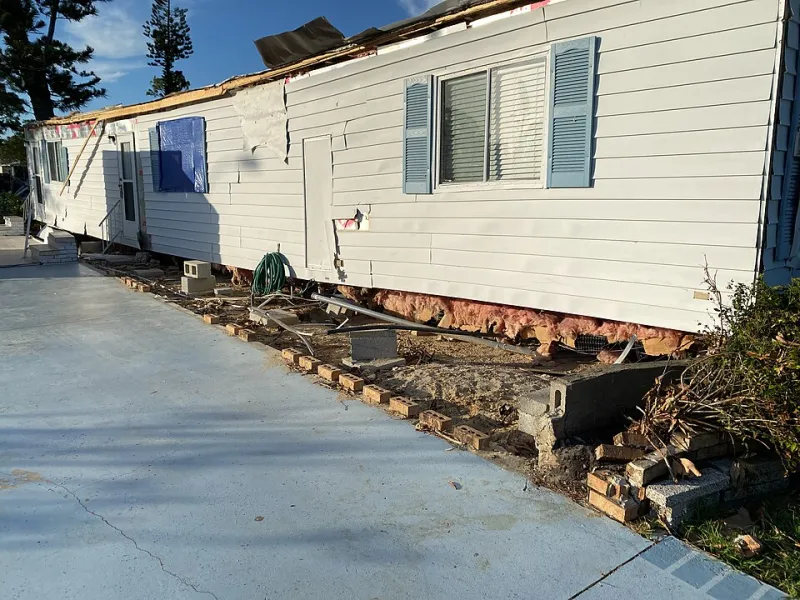
Photo: National Weather Service Tampa Bay Area, Florida, Public domain, via Wikimedia Commons
Ask any Florida contractor what's changed most in the last three years, and you'll rarely hear about materials or labor. You'll hear about insurance.
"Homeowners used to call wanting a kitchen remodel," says a Tampa-based general contractor who's been in the trade for two decades. "Now half my calls start with 'my renewal went up $4,000 — what can I do to my house?'"
That's not an exaggeration. As carriers have pulled back or raised rates across the state, the renovation conversation in Florida has quietly shifted from granite countertops to wind mitigation. And if you're planning to hire a contractor this year, understanding what your insurer actually values could save you — or cost you — thousands.
The Roof Rule That Overshadows Everything
Here's the blunt reality: if your roof is pushing 15 years old, many carriers won't write you at all, and most won't renew you happily. A few insurers have relaxed their stance after state reforms in 2022 and 2023, but roof age remains the single biggest factor homeowners can control.
A full replacement isn't cheap — figure $12,000 to $30,000 depending on size and material — but it does more than keep a policy in force. A new roof installed to current code, with a documented water barrier and proper decking attachment, can qualify you for meaningful wind mitigation credits.
One caveat agents keep repeating: get the paperwork. A roof upgrade without a completed wind mitigation inspection report is money left on the table. "We've had clients replace a roof and never file the form," one Miami insurance agent told us. "Then they wonder why the premium didn't budge."
Impact Windows: Worth It or Overhyped?
Impact windows are the upgrade everyone asks about and the one with the most complicated answer.
The good news: they count. Under Florida's wind mitigation credit system, opening protection — impact-rated windows and doors, or approved shutters — can reduce the wind portion of your premium. In high-velocity hurricane zones like Miami-Dade and Broward, the credits are often substantial.
The bad news: the math rarely works on premium savings alone. Whole-house impact window installation routinely runs $15,000 to $50,000. Even a generous annual credit might take decades to pay for itself.
So why do agents still recommend them? Because the benefits stack up outside the line item: quieter interiors, better UV protection, lower cooling bills, burglar resistance, and — critically — a home that's far more marketable. Several contractors told us buyers now ask about impact windows the way they once asked about the water heater's age.
Our take: treat impact windows as a lifestyle-plus-resale investment with an insurance bonus, not a premium-slaying strategy.
The Cheap Wins Most Homeowners Ignore
Not every effective upgrade costs five figures. Contractors say the best return-per-dollar items are often the least glamorous:
- A wind mitigation inspection ($100–$200) that documents features you may already have — roof-to-wall attachments, secondary water resistance, hip roof shape. Many homes qualify for credits the owners never claimed.
- Hurricane shutters, which deliver a meaningful chunk of the opening-protection credit at a fraction of impact-window cost.
- Garage door bracing or a code-rated replacement. A two-car garage door is the biggest hole in most Florida homes during a windstorm, and insurers know it.
- Updated roof-to-wall straps and clips, often added during a reroof for a few hundred dollars in materials.
What Doesn't Move the Needle
Just as important is knowing where not to spend. Agents we spoke with were candid: a new HVAC system, a remodeled kitchen, a fresh fence — none of it affects your premium. Neither, surprisingly, do many "hurricane-resistant" landscaping upgrades or generic storm doors that don't carry a Miami-Dade or Florida Product Approval rating.
"If it doesn't have the product approval documentation, we can't give credit for it," one agent said. "Homeowners spend money on things a salesman told them were hurricane-proof, and it does nothing for the policy."
Before You Hire: The Homeowner's Roadmap
If insurability is driving your renovation, sequence matters. Start with a wind mitigation inspection so you know your baseline. Call your agent — or a broker who shops multiple carriers — and ask which improvements on your specific policy generate credits. Then bring that list to licensed, insured contractors and get itemized quotes.
And one final tip from the pros: keep every permit, product approval sheet, and inspection report in a folder. In Florida's insurance market, documentation isn't just paperwork. It's the difference between an upgrade and an expense.