One Bay for the Car, One Bay for the Paycheck: The Case for a Garage Conversion in Florida
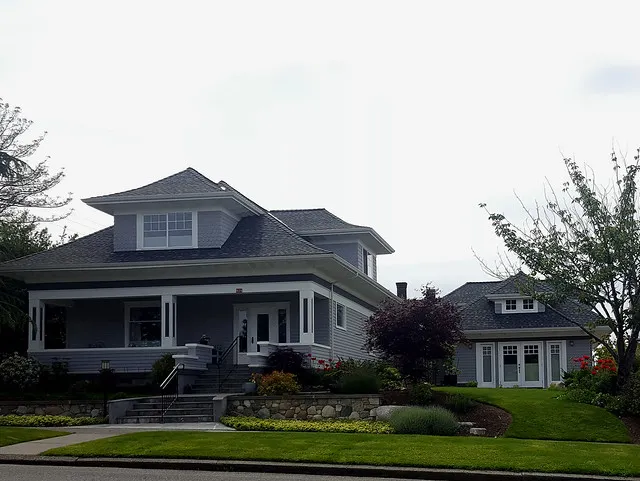
Photo: Sightline Institute: Missing Middle Homes Photo Library, CC BY 2.0, via Wikimedia Commons
Walk down any Florida cul-de-sac and you'll notice something funny: the three-car garages are full of everything except cars. Kayaks, holiday decorations, a chest freezer from 2009, and someone's half-finished woodworking dreams. Meanwhile, the homeowner inside is paying for a home office they don't have or renting storage down the street.
There's a better use for that square footage, and more Florida homeowners are catching on. Converting a single garage bay — usually a 12-by-22-foot slab of concrete and good intentions — into finished, livable space is one of the most cost-effective renovations going. But like everything in this state, it comes with its own paperwork, humidity, and hiring pitfalls.
First, the Question Everyone Asks: What Happens to Resale?
Let's address the elephant in the garage. Real estate agents love to warn that losing parking kills your home value. In practice? It depends entirely on where you live.
In walkable neighborhoods — think St. Petersburg's Kenwood, Tampa's Seminole Heights, Orlando's College Park — buyers often care more about flex space than a third parking spot. A finished studio that could serve as an office, guest suite, or rental gets real attention. In sprawling suburbs where cars rule and HOAs may require driveway parking to stay tidy, the math gets shakier.
A good middle path: design the conversion so it's reversible. Keep the garage door intact from the outside and build the finished room as an insulated interior shell. Future buyers can picture a car bay again; you get your workshop today.
The Permit Puzzle, Florida Edition
Garage conversions trip up homeowners because they're not just cosmetic — you're changing how the house breathes and how it's classified.
A few things your permit application will likely touch:
- Electrical. Most Florida garages have minimal wiring. You'll need dedicated circuits, GFCI outlets, and probably a panel upgrade if you're adding HVAC or running power tools.
- HVAC. Extending your existing AC is common in Central and North Florida, but in South Florida, a mini-split is often the smarter call — cheaper to run for a single zone and no ductwork through the attic.
- Egress. If the space will ever be a bedroom or rental unit, code requires a proper emergency exit window or door. This is non-negotiable and where DIY plans often die.
- Flood zones. If you're in a designated flood zone, converting garage space can affect your elevation certificate and insurance. Check with your local building department before you fall in love with floor plans.
And yes — unpermitted garage conversions are one of the most common violations code enforcement finds in Florida. If you ever sell, an appraiser or buyer's inspector will notice a finished room with no windows and no permit history. Get the permit.
What the Flex Space Should Be
The best conversions match the space to how you actually live. A few proven plays:
The workshop. Cheapest option by far. Insulate the walls, add a mini-split, run proper 240V circuits for tools, and finish with epoxy floors. In most Florida markets you can do this for $8,000–$15,000 with a licensed electrician and HVAC tech handling the technical work.
The home office. Add insulation, drywall, flooring, and decent lighting, and you've got the quietest room in the house. Post-2020, this is the conversion that pays for itself in sanity. Budget $15,000–$25,000 depending on finishes.
The rental-ready suite. This is the big leagues: plumbing for a bathroom, a kitchenette, and full egress. Done right, a garage studio in Miami, Tampa, or Orlando can rent for $900–$1,500 a month. Done wrong — meaning unpermitted — it can generate fines and complicate a sale. Budget $40,000–$70,000 and treat it like the serious renovation it is. Check whether your municipality allows accessory dwelling units at all; some Florida cities embrace them, others ban them outright.
Picking the Right Contractor for a Weird Job
Garage conversions sit in an awkward middle ground — too involved for a handyman, too small to interest some general contractors. When you're collecting bids, look for someone who has done this specific conversion before, not just kitchens and baths.
Ask to see a past garage project, permit included. Ask how they'd handle the slab (existing garage floors often need a moisture barrier or a thin self-leveling overlay). And ask how they'll match the exterior — a conversion that looks bolted-on from the curb hurts you twice, at appraisal and at sale.
Red flags specific to this job: a contractor who waves off the egress requirement, suggests "we can skip the permit, nobody checks," or quotes you a flat price without inspecting your electrical panel. Any of those, walk away.
The Humidity Fine Print
One last Florida-specific note: garages were built to leak air, not hold it. Once you condition that space, it becomes part of your home's thermal envelope — which means insulation quality matters, vapor barriers matter, and that old garage door opening needs to be framed and insulated like an exterior wall, because that's what it now is.
Skimp here and you'll end up cooling the neighborhood while your new office grows a musty smell by August. Spend the extra $2,000 on the envelope. You'll thank yourself every summer.
The Bottom Line
A three-car garage in Florida is often two cars of parking and 200 square feet of expensive storage. Converting one bay into space you actually use — whether that's a workshop, an office, or income — is one of the few renovations that improves your daily life and your property's story at the same time. Get the permit, hire someone who's done it before, and build for the humidity. Your car will survive with one less bay. Your weekends won't know what hit them.